HR Services for Germany
Customized HR services in Germany for international companies: payroll, employment contracts, compliance and recruitment, run by a European team that knows German labor law. Expand into Europe’s largest economy without building an HR department first.
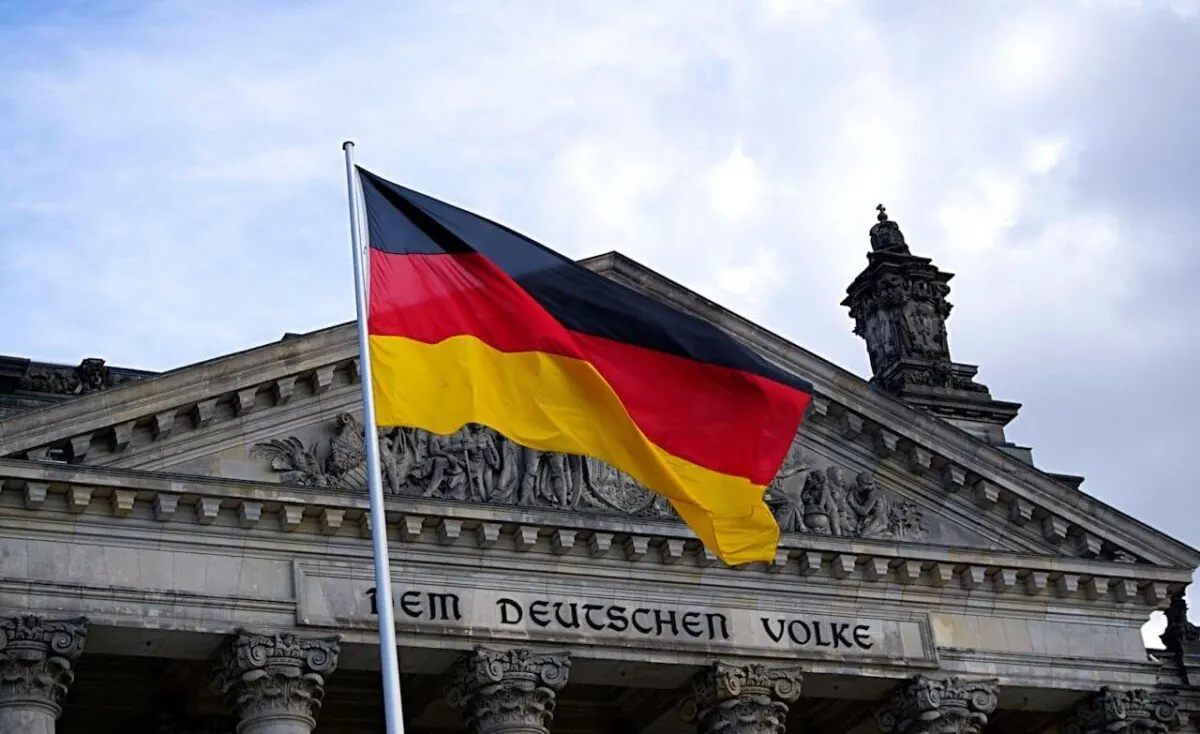
Figures as of October 2026. Collective agreements often set higher standards.
Expand Into Germany With a Partner Who Knows the Rules
Germany has much to offer US and UK companies growing in Europe: the EU’s largest consumer market, a deep pool of skilled talent and a stable, innovation-driven economy. It also has one of the most regulated labor markets in Europe, where a missing clause or a skipped consultation can cost you quickly.
Europe HR Solutions gives you one HR partner for Germany. We set up and run payroll, draft compliant employment contracts and handbooks, manage benefits and recruitment, and keep every process in line with German labor law, so your team can focus on the business.
On this page
All You Need to Know About Outsourcing Your HR in Germany With EHRS
One coordinated service instead of a patchwork of local providers, with a senior team in Belgium and in-country specialists in Germany.
Efficient HR management
We handle the complex HR tasks in Germany, from payroll and recruitment to compliance and employee relations, as one coordinated service, so operations run smoothly while your team focuses on growth.
Compliance with German labor law
Written contracts, working time, benefits and dismissal protection follow detailed statutory rules and often a collective agreement. We make sure every HR process meets them, and stays compliant as the rules change.
Cost-effective HR
Outsourcing replaces the cost of an in-house German HR team with a flexible service that scales with your headcount, from the first hire to a full local operation.
HR Services We Provide in Germany
Every service below is available for Germany, delivered under one European agreement and coordinated with the rest of your European footprint.
Employer registration, payroll and social security setup before your first German hire.
Employment documentation→German-law contracts, handbooks and policies, in German and English.
Payroll and systems coordination→Monthly payroll with a local provider, wage tax and contributions filed on time.
Compensation and benefits→Pay bands, statutory and supplementary benefits, benchmarked to the German market.
Recruitment support→Role scoping, sourcing and selection for German hires, including non-EU talent.
HR compliance audit→A structured review of contracts, payroll and policies against German law.
Retained HR services→Ongoing HR support, manager training and works council guidance on a monthly retainer.
M&A HR support→HR due diligence, employee transfers and integration for German acquisitions.
German Employment Regulations to Know
The rules that shape every German employment relationship. Most come from federal law, with collective agreements and works council rights layered on top.
Employment contracts
The essential terms must be documented in writing, and fixed-term contracts are only valid in writing. Collective agreements often apply by sector and set terms the contract cannot undercut.
Working hours and overtime
The Working Time Act allows 8 hours a day, up to 10 with averaging, and caps the week at 48 hours. A 40-hour week is standard. Overtime is paid or compensated in time off, and working time must be recorded.
Minimum wage
The statutory minimum wage is €13.90 per hour in 2026 and rises to €14.60 in 2027. Collective agreements frequently set higher floors for their sector.
Paid leave and public holidays
At least 20 working days of paid leave on a five-day week; 25 to 30 days is common practice. Public holidays are set by federal state, between 9 and 13 a year.
Sick leave
Employers continue full salary for up to six weeks per illness, after which statutory health insurance pays. A medical certificate is due from the fourth day, or earlier if the contract requires it.
Parental leave
Each parent can take up to three years of job-protected parental leave per child. The state pays the parental allowance, not the employer.
Probation and notice
Probation can last up to six months with two weeks’ notice. After that, statutory notice runs from four weeks to seven months depending on length of service.
Dismissal protection
In companies with more than ten employees, a dismissal needs a valid reason related to conduct, the person or the business, and often a social selection and a severance negotiation.
Works councils and collective agreements
From five employees, staff can elect a works council with co-determination rights on hiring, working hours and dismissals. Collective agreements are binding wherever they apply.
Social security
Employer and employee each pay roughly 20 to 21% of gross salary for pension, health, unemployment and long-term care insurance. The employer also pays accident insurance.
The Benefits of Expansion in Germany
Germany rewards companies that set up properly: scale, talent and a reliable framework.
Europe’s largest economy
The EU’s biggest economy and consumer market, with 83 million residents and strong purchasing power.
A skilled workforce
Around three quarters of the workforce hold a degree or completed vocational training, with deep talent in engineering, manufacturing, IT and finance.
Strategic location
In the heart of Europe, with world-class infrastructure and fast access to every EU market.
Innovation climate
Consistently among the ten most innovative countries in the Global Innovation Index, with federal programs for breakthrough innovation.
Startup and hiring incentives
Favorable conditions for new companies, and hiring incentives through the Federal Employment Agency.
A predictable framework
Clear rules, strong institutions and reliable courts give foreign employers long-term security.
The Challenges of Expansion in Germany
None of these stop a well-prepared company. All of them slow down an unprepared one.
Complex labor law
Contracts, terminations and employee rights are tightly regulated, with court rulings shaping the detail. Expert HR support is not optional.
High labor costs
Mandatory social contributions and generous statutory benefits make the total cost of employment high. Budget for it from the first offer.
Bureaucracy and registration
Registering a company and an employer, and getting permits, can take weeks or months. Plan the timeline before the first hire.
Competition for talent
More than 36,000 foreign companies already operate in Germany, so standing out as an employer takes a competitive, well-structured offer.
Tax complexity
Several taxes await a foreign employer, and the system is known for its complexity. Get advice before the first payroll.
Language and documentation
Contracts, works council communication and filings with the authorities are in German. Translations have to be accurate, not approximate.
Key HR Compliance Risks in Germany
The mistakes foreign employers make most often in Germany, and what each one costs.
Missing written terms
Essential employment terms not documented in writing: fines of up to €2,000 per violation and weak evidence in any dispute.
Dismissal without grounds
A termination in a company with more than ten employees without a valid, documented reason can end in reinstatement or an expensive settlement.
Contractor misclassification
Freelancers who work like employees trigger retroactive social contributions, back taxes and personal liability for managers.
Fixed-term contracts misused
Fixed terms without objective reason are limited to two years and three renewals. Beyond that, the contract becomes permanent automatically.
No working time records
Employers must record working time. Missing records mean fines and uncontested overtime claims.
Works council skipped
Decisions taken without the required consultation can be blocked and have to be restarted, with the works council involved from the beginning.
Collective agreement overlooked
If a sector agreement applies, its pay and conditions bind you even if the contract says otherwise. Back pay and penalties follow.
Data protection in HR records
Employee data falls under the GDPR and the German Data Protection Act. Sloppy HR records and monitoring practices draw fines and works council objections.
Key Sectors for Foreign Employers in Germany
The sectors where our clients hire most in Germany, and where local collective agreements and talent competition matter most.
Learn More About HR in Germany
Authorities, contracts, working time, leave and a hiring checklist for Germany.
Read the guide →ArticleGerman Works Council (Betriebsrat): Requirements and Employee RightsWhen a works council can be formed and what co-determination means for your decisions.
Read the article →Free HR Guide for Germany
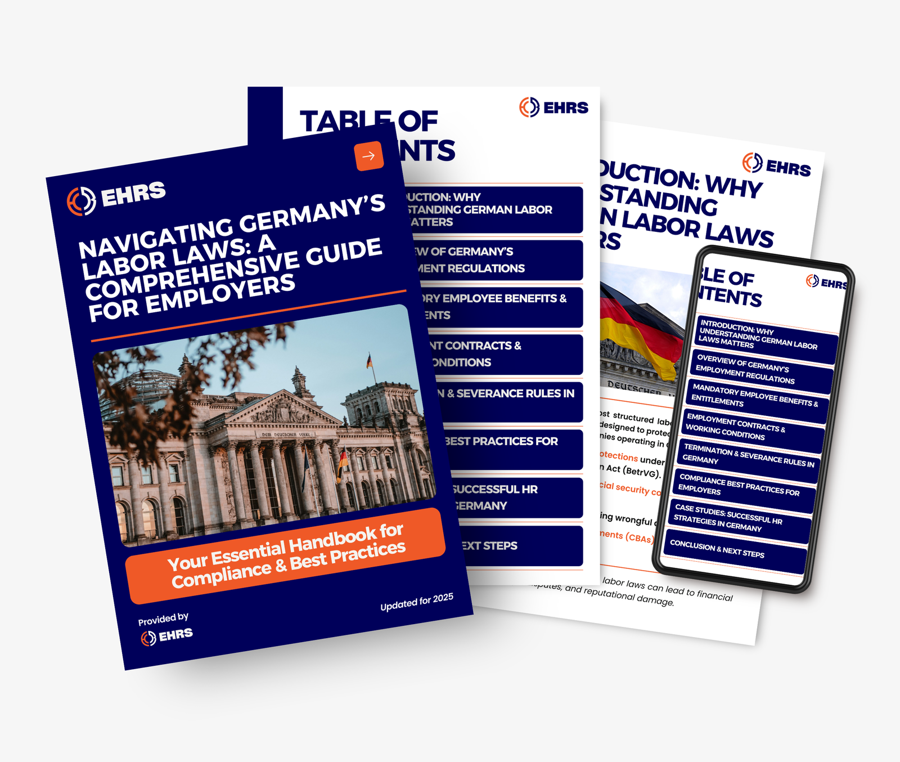
Navigating Germany’s Labor Laws
A comprehensive guide for employers: contracts, working time, benefits, termination and the rules that trip up foreign companies.
One conversation with a senior consultant, no obligation. We tell you what applies to your plan in Germany and what to do first.
Free ConsultationMost Asked Questions About Germany
The objections we hear most from companies before they hire in Germany, with a straight answer to each.
Do I really need detailed employment contracts in Germany? Isn’t a handshake enough?
No. German law requires the essential terms of employment to be set out in writing, and a fixed-term contract is only valid in writing. Without a proper contract, disputes over hours, pay and benefits are hard to win.
Do I need a probation period? Can’t I just let someone go if they don’t work out?
A probation period of up to six months is the only time you can part ways on two weeks’ notice without a reason. Once dismissal protection applies, you need valid grounds and a clean process.
Overtime rules sound expensive. Can overtime just be part of the salary?
Only within limits. Overtime must be paid or compensated in time off unless a lawful clause in the contract covers a reasonable amount of it, and the Working Time Act caps still apply.
Sick leave seems like a big burden. What if employees abuse it?
Employers pay full salary for the first six weeks of each illness. Employees must present a medical certificate, by the fourth day at the latest. Abuse is rare and can be addressed through the proper channels.
Terminating employees in Germany sounds impossible. What are my options?
It is strict, not impossible. In companies with more than ten employees you need a valid reason, the right notice period and often a severance negotiation. Mutual termination agreements are common.
Collective bargaining agreements seem restrictive. Can I avoid them?
If your industry and region fall under a binding agreement, it applies whether you signed it or not. It sets minimum wages, benefits and working conditions. Where it does not apply, you have more freedom.
Hiring non-EU employees seems like a bureaucratic nightmare. Is it worth it?
Non-EU hires need a work and residence permit, and the EU Blue Card offers a fast track for qualified professionals. The process is manageable with the right paperwork and timing.
Fixed-term contracts seem complicated. Can I hire everyone on a fixed term?
No. Without an objective reason, fixed-term contracts are limited to two years and three renewals. Go beyond that and the contract converts into a permanent one automatically.
Why should I stick to the 40-hour week? Can’t I pay people extra to work more?
The Working Time Act limits work to 8 hours a day, 10 with averaging, and 48 hours a week. Paying more does not lift the cap, and violations are fined.
Do I really have to give 20 or more vacation days?
Yes. Twenty working days on a five-day week is the statutory minimum, and most contracts and collective agreements offer 25 to 30. Below the minimum is not an option.
Works councils sound like a headache. Do I really need one?
You cannot prevent one. From five employees, staff can elect a works council, and it has real consultation and co-determination rights. Engaging with it properly avoids blocked decisions.
What happens if I fail a compliance audit or a labor inspection?
German authorities inspect payroll, contracts, working time and workplace safety. Non-compliance leads to fines, back payments and in serious cases operational restrictions.
Talk to an HR Specialist About Payroll, Compliance and Audits Today
Expand into Germany with confidence.